
Have you ever taken a sip of hot tea or cold water and suddenly felt a sharp pain in one of your teeth? Tooth sensitivity is a common dental problem, but it should not always be ignored. Some people experience only mild, occasional discomfort, while others feel intense pain whenever they consume hot, cold, sweet, or acidic foods and drinks. Understanding the common tooth sensitivity causes can help you determine whether the problem is temporary or a sign that you need dental treatment.
In many cases, sensitivity is caused by exposed dentin, gum recession, enamel wear, or tooth decay. However, persistent or worsening sensitivity can sometimes indicate a cracked tooth, deep cavity, or inflammation inside the tooth.
What is Tooth Sensitivity?
Tooth sensitivity occurs when the inner layer of the tooth, called dentin, becomes exposed or irritated. A healthy tooth is protected by enamel above the gumline and cementum around the root. Underneath these protective layers is dentin, which contains thousands of microscopic channels leading toward the nerve inside the tooth. When dentin becomes exposed, hot, cold, sweet, or acidic substances can stimulate these channels and cause a sudden painful sensation. The pain may last only a few seconds or continue for a longer period depending on the underlying cause.
What Does Tooth Sensitivity Feel Like?
Tooth sensitivity can feel different from person to person.
Common symptoms include:
- Sharp pain after drinking cold water
- Discomfort while eating ice cream
- Sensitivity to hot tea or coffee
- Pain after eating sweet foods
- Sensitivity when breathing in cold air
- Pain while brushing certain teeth
- Discomfort near the gumline
Some people feel sensitivity in one tooth, while others experience it across several teeth.
The location, duration, and severity of the pain can provide important clues about the underlying cause.
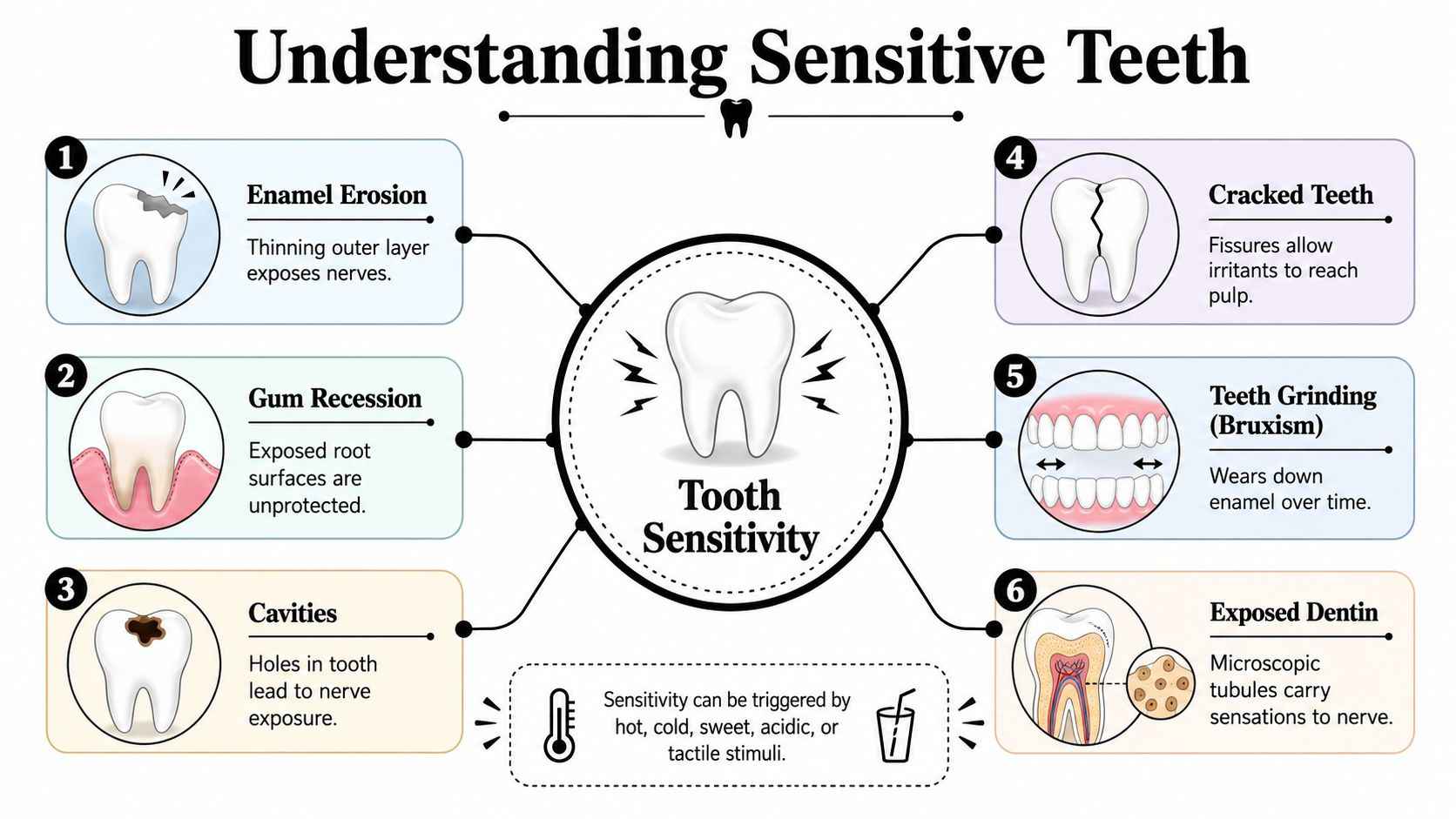
Common Tooth Sensitivity Causes
There are many possible reasons why your teeth may become sensitive to hot and cold.
- Worn Tooth Enamel
Enamel is the hard outer surface that protects your teeth. Over time, enamel may wear down because of:
- Aggressive brushing
- Frequent acidic foods and drinks
- Teeth grinding
- Natural wear
- Certain dental conditions
As enamel becomes thinner, the underlying dentin can become more exposed. This may lead to increased sensitivity to temperature changes.
-
Gum Recession
Gum recession occurs when the gum tissue moves away from the tooth, exposing part of the root. The roots of teeth are not covered by the same thick enamel found on the crown of the tooth. This means exposed roots may become particularly sensitive to:
- Cold water
- Hot drinks
- Sweet foods
- Toothbrushing
Gum recession may be associated with gum disease, aggressive brushing, tooth position, or other factors. If sensitivity is concentrated near the gumline, exposed roots may be responsible.
-
Tooth Decay or Cavities
Dental decay is one of the most important tooth sensitivity causes. A small cavity may initially cause little or no discomfort. As the cavity becomes deeper, the tooth may become increasingly sensitive.
Symptoms may include:
- Sensitivity to sweets
- Pain with cold drinks
- Pain while chewing
- Visible dark spots or holes
- Food becoming trapped in the tooth
If decay reaches close to the dental pulp, sensitivity may become more intense or last longer. Early cavities may often be treated with a filling, while deeper decay may require more extensive treatment.
-
Cracked or Fractured Tooth
A crack in the tooth can expose deeper tooth structure and irritate the nerve. Cracks are not always visible. Possible symptoms include:
- Sharp pain while biting
- Sensitivity to cold
- Pain when releasing your bite
- Intermittent discomfort
- Pain that is difficult to locate
A cracked tooth should be evaluated because cracks can sometimes become larger over time. Treatment depends on the depth and location of the fracture.
-
Worn or Damaged Fillings
Older fillings may become worn, cracked, loose, or develop gaps around their edges. This may allow temperature changes or bacteria to affect the underlying tooth. You may notice sensitivity when eating or drinking, discomfort while chewing, or food becoming trapped around the filling. A dentist can examine the restoration and determine whether it needs repair or replacement.
-
Gum Disease
Gum disease can lead to loss of gum attachment and exposure of the tooth roots. As the roots become exposed, temperature sensitivity may increase. Other symptoms of gum disease may include:
- Bleeding gums
- Swollen gums
- Gum recession
- Persistent bad breath
- Loose teeth in advanced cases
If sensitivity occurs together with bleeding or receding gums, a periodontal evaluation may be necessary.
-
Brushing Too Hard
Many people believe that harder brushing provides better cleaning. However, excessive pressure can contribute to enamel wear and gum recession. Over time, this may expose sensitive areas of the tooth. Signs of aggressive brushing may include:
- Gum recession
- Sensitivity near the gumline
- Worn toothbrush bristles
- Notches near the neck of the tooth
Use a soft-bristled toothbrush and gentle pressure instead.
-
Teeth Grinding or Clenching
Grinding or clenching the teeth, known as bruxism, can gradually wear down enamel. It may also place additional stress on teeth and contribute to cracks or sensitivity. Possible signs include:
- Morning jaw pain
- Headaches
- Flattened or worn teeth
- Chipped teeth
- Tooth sensitivity
- Jaw stiffness
If you suspect grinding, your dentist can check for signs of excessive wear.
-
Acidic Foods and Drinks
Frequent consumption of acidic foods and beverages can gradually erode enamel. Examples include:
- Soft drinks
- Energy drinks
- Citrus fruits
- Fruit juices
- Vinegar-based foods
- Frequent sour candies
Acid erosion may make the teeth appear thinner, smoother, or more sensitive. Reducing frequent acid exposure and maintaining good oral hygiene can help protect enamel.
-
Teeth Whitening Products
Whitening treatments can cause temporary sensitivity in some people. This may occur after:
- Professional whitening
- Whitening strips
- Whitening gels
- Certain whitening toothpastes
The sensitivity is often temporary, but it is important to use whitening products as directed. If sensitivity becomes severe or prolonged, stop using the product and consult a dentist.
-
Recent Dental Treatment
Temporary sensitivity may occur after procedures such as:
- Dental fillings
- Professional cleaning
- Crown placement
- Teeth whitening
- Other restorative treatment
This type of sensitivity often settles over time. However, if the pain becomes stronger, lasts for an extended period, or develops into spontaneous toothache, the tooth should be re-evaluated.
-
Deep Tooth Inflammation
Sometimes sensitivity is caused by inflammation of the dental pulp inside the tooth. The pulp contains nerves and blood vessels. Deep cavities, cracks, trauma, or other dental problems may cause pulp inflammation.
Possible signs include:
- Severe sensitivity
- Pain that lingers after hot or cold foods
- Throbbing toothache
- Night-time pain
- Pain without any obvious trigger
If the pulp becomes severely or irreversibly inflamed, root canal treatment may be required.
Why is My Tooth Sensitive to Cold but Not Hot?
Cold sensitivity is common and can be related to exposed dentin, gum recession, enamel wear, or early tooth decay. If the pain is brief and disappears quickly after the cold stimulus is removed, the problem may be relatively mild. However, if pain continues for a long time after drinking cold water, this may indicate deeper irritation inside the tooth. Persistent symptoms should be evaluated by a dentist.
Why is My Tooth Sensitive to Hot Drinks?
Sensitivity to heat may sometimes be more concerning, particularly when the pain lingers after the hot drink has been removed. Hot sensitivity can occur with:
- Deep decay
- Dental pulp inflammation
- Cracked teeth
- Previous dental treatment
- Infection inside the tooth
If hot drinks trigger prolonged pain or throbbing, arrange a dental examination.
How Long Should Tooth Sensitivity Last?
Brief sensitivity lasting a few seconds may occur with exposed dentin or minor irritation. Sensitivity that lasts longer, becomes more severe, or occurs spontaneously may indicate a deeper problem. You should be particularly cautious if the pain:
- Lasts for several minutes
- Wakes you at night
- Occurs without eating or drinking
- Becomes throbbing
- Is associated with swelling
- Progressively worsens
These symptoms deserve professional assessment.
When is Tooth Sensitivity a Warning Sign?
Tooth sensitivity should not be ignored when it is persistent or accompanied by other dental symptoms.
Important warning signs include:
- Pain That Lasts After Hot or Cold Exposure: If discomfort continues long after the stimulus has been removed, the pulp inside the tooth may be significantly inflamed.
- Severe Night-Time Tooth Pain: Pain that wakes you during sleep or becomes worse at night may indicate a deeper dental problem.
- Pain While Biting: Sensitivity combined with pain while chewing may be associated with a crack, infection, or inflammation around the root.
- Swelling Around the Tooth: Sensitivity accompanied by gum or facial swelling should be evaluated promptly.
- A Dark or Discoloured Tooth: A tooth that changes colour, especially after an injury, may have internal damage.
- Visible Cavity or Broken Tooth: If sensitivity occurs in a tooth with visible decay, a fracture, or a damaged filling, treatment should not be delayed.
How is Tooth Sensitivity Diagnosed?
A dentist may begin by asking:
- When does the sensitivity occur?
- Is it triggered by hot, cold, sweet, or pressure?
- How long does the pain last?
- Does the tooth hurt at night?
- Has there been any recent dental treatment or trauma?
The dentist may then examine the teeth for:
- Cavities
- Gum recession
- Cracks
- Worn enamel
- Broken fillings
- Gum disease
Dental X-rays or sensitivity tests may be recommended depending on the symptoms. Proper diagnosis is important because different causes require different treatments.
Treatment for Tooth Sensitivity
Treatment depends on the underlying cause.
- Desensitizing Toothpaste: For mild sensitivity caused by exposed dentin, your dentist may recommend toothpaste specifically designed for sensitive teeth. These products generally work gradually rather than providing immediate relief. Use them consistently according to instructions.
- Fluoride Treatment: Professional fluoride applications may be recommended in some cases to strengthen tooth surfaces and reduce sensitivity.
- Dental Filling: If sensitivity is caused by a cavity, the decayed portion of the tooth may need to be removed and restored with a filling. Treating decay early may prevent it from progressing closer to the nerve.
- Treatment for Gum Recession: Treatment for exposed roots depends on the severity and cause of gum recession. Management may include improved brushing technique, periodontal treatment, or other dental procedures.
- Repairing Damaged Restorations: Loose, cracked, or worn fillings and crowns may need repair or replacement.
- Treatment for Teeth Grinding: If grinding is contributing to tooth wear or sensitivity, your dentist may recommend strategies to protect your teeth. In some cases, a custom dental appliance may be considered.
- Root Canal Treatment: If sensitivity is caused by severe inflammation or infection inside the tooth, root canal treatment may be recommended. During root canal treatment, the affected tissue is removed, the root canal system is cleaned and sealed, and the tooth is restored. Not every sensitive tooth requires a root canal. Diagnosis is essential before deciding on treatment.
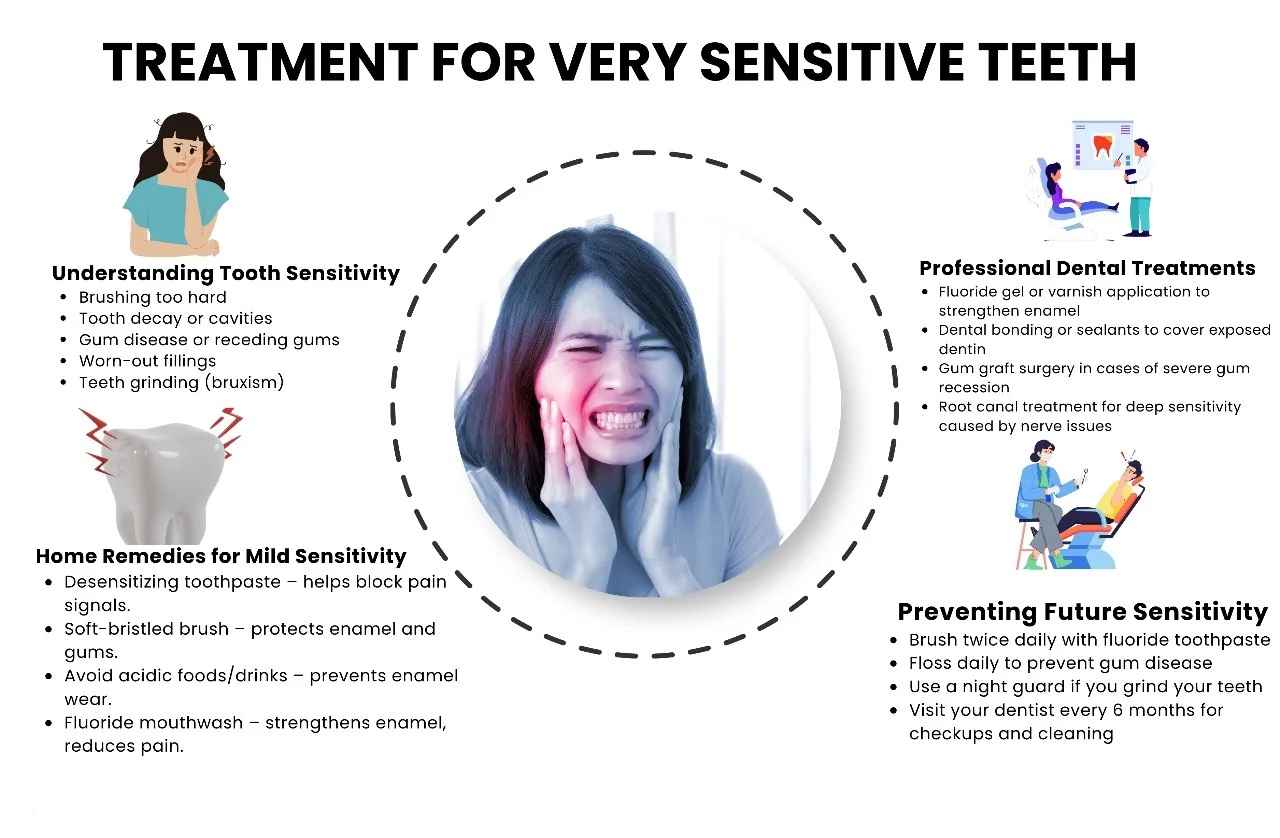
What Can You Do at Home for Sensitive Teeth?
If your sensitivity is mild, these steps may help:
- Use toothpaste designed for sensitive teeth.
- Brush gently with a soft-bristled toothbrush.
- Avoid aggressive scrubbing.
- Reduce frequent acidic foods and drinks.
- Avoid extremely hot or cold foods temporarily.
- Maintain regular brushing and interdental cleaning.
- Avoid chewing very hard foods on a painful tooth.
Home care may reduce symptoms, but it cannot treat cavities, cracked teeth, infection, or advanced gum disease.
Should You Stop Drinking Cold Water if Your Teeth Are Sensitive?
You do not necessarily need to avoid cold drinks permanently. However, if cold water repeatedly causes sharp pain, temporarily avoiding extreme temperatures may make you more comfortable while you arrange a dental evaluation. The important step is identifying why the tooth is sensitive rather than only avoiding the trigger.
Can Sensitive Teeth Heal on Their Own?
Some temporary sensitivity may improve, especially after certain dental treatments or minor irritation. However, structural problems such as cavities, cracks, gum recession, or damaged fillings generally require professional management. Do not assume that disappearing sensitivity means the underlying problem has completely resolved.
Can Tooth Sensitivity Mean You Need a Root Canal?
Sometimes. A sensitive tooth does not automatically require root canal treatment. However, root canal therapy may be considered when symptoms indicate severe or irreversible inflammation inside the tooth.
Possible warning signs include:
- Long-lasting sensitivity
- Severe pain with heat
- Spontaneous toothache
- Throbbing pain
- Night-time pain
- Swelling
- Pain while biting
A dentist needs to examine the tooth before confirming whether root canal treatment is required.
How Can You Prevent Tooth Sensitivity?
Some causes of sensitivity can be prevented or reduced through good oral care.
Try to:
- Brush twice daily with fluoride toothpaste.
- Use a soft-bristled toothbrush.
- Avoid brushing with excessive force.
- Clean between your teeth daily.
- Limit frequent acidic foods and drinks.
- Have cavities treated early.
- Attend routine dental check-ups.
- Seek care for cracked or damaged teeth.
- Address teeth grinding if present.
- Maintain healthy gums.
Early dental treatment can prevent small problems from progressing into more painful conditions.
Frequently Asked Questions About Tooth Sensitivity
Q1. Why are my teeth suddenly sensitive?
Ans. Sudden sensitivity may be related to gum recession, a cavity, cracked tooth, worn filling, recent dental treatment, enamel erosion, or pulp irritation.
Q2. Why does only one tooth hurt with cold water?
Ans. Sensitivity in a single tooth may indicate localized decay, a crack, gum recession, restoration problems, or pulp inflammation.
Q3. Can sensitive toothpaste completely cure sensitivity?
Ans. It may reduce symptoms when exposed dentin is responsible, but it cannot repair cavities, cracks, infection, or significant gum disease.
Q4. Does sensitivity always mean a cavity?
Ans. No. Sensitivity can have many causes, including gum recession, enamel wear, teeth grinding, whitening treatment, or damaged restorations.
Q5. Should I see a dentist if sensitivity lasts only a few seconds?
Ans. Occasional mild sensitivity may not be urgent, but repeated symptoms should still be mentioned during a dental check-up. Persistent or worsening sensitivity should be assessed sooner. There are many possible tooth sensitivity causes, ranging from minor enamel wear and exposed tooth roots to cavities, cracked teeth, gum disease, and inflammation inside the tooth.
Brief sensitivity does not always indicate a serious problem. However, pain that becomes stronger, lasts after hot or cold exposure, wakes you from sleep, or occurs with swelling should not be ignored. The most effective treatment depends on identifying the exact cause. If sensitivity keeps returning, schedule a dental examination instead of simply avoiding hot or cold foods. Early diagnosis may help prevent a relatively minor problem from developing into a more complicated dental condition.
Tooth Sensitivity Treatment in Rewari
If you are experiencing sensitivity to hot or cold foods, persistent toothache, pain while chewing, or other dental discomfort, you can consult M L Yadav Memorial Dental Clinic in Rewari for a dental evaluation. A professional examination can help determine whether the sensitivity is related to enamel wear, gum recession, tooth decay, a cracked tooth, pulp inflammation, or another condition. Early treatment can help protect your natural teeth and prevent the problem from becoming more severe.